


The latest version of Canonical's popular Linux distribution Ubuntu (9.10 "Karmic Koala") was officially released today and is now available for download.
Among numerous performance improvements (Upstart native jobs, Intel video driver acceleration switched from "EXA" to "UXA", GRUB 2 boot loader by default, ext4 filesystem by default) and upgrades to the architecture (Linux Kernel 2.6.31, Gnome 2.28, X.Org 7.4, X.Org server 1.6.4, Xsplash and Compiz Fusion 0.8.4), Ubuntu 9.10 has thrown in a couple of compelling new products to make Karmic Koala worth a second look for those still apprehensive about Linux operating systems and largely unfamiliar with all the architectural and environmental upgrades.
The first of these is SoftwareCenter, a graphical package manager designed to simplify the act of installing or removing software. The rationale behind this project is that Ubuntu has never had a single, cohesive graphical method for application management.
"Having multiple sanctioned graphical methods of installing software...makes people more likely to think that unsanctioned methods are just as safe, when they are not. Meanwhile, the descriptions of available software are often technical gibberish. And many software project and vendor Web sites either provide command-line installation instructions (dulling users to malicious terminal commands from other sources) or .tar.gz downloads that are difficult to install and near-impossible to update," the project's description says.
Including better application descriptions, better screenshots, and a better overall experience, Software Center will hopefully make software discovery, installation and management more user friendly.
Secondly, Karmic Koala comes with Ubuntu One, a cloud sync utility which comes with 2 GB of online storage to all free users or 50 GB for a monthly $10 fee. Ubuntu One lets users store and share files, Tomboy notes, and Evolution contact data between multiple machines, and includes a Web interface for accessing content when on other machines.
In addition to the new desktop interface, a Karmic Koala Netbook Remix and Server Edition (featuring Ubuntu Enterprise Cloud) were also released today.
"Ubuntu 9.10 gives users more reasons than ever to seriously consider Linux at a time when many are thinking again about their operating system options. We are delivering a platform for users interested in an easy-to-use, great-looking, Web-friendly operating system," Jane Silber, Canonical COO said in a statement earlier this week. "A faster, more beautiful boot and login sequence, file and contact synchronization through online services and great experiences on the most popular notebook, desktop and netbook models continue to drive Ubuntu into the mainstream of computing choices."
Copyright Betanews, Inc. 2009


 First, disclosure: My fellow Canadians and I are no strangers to iPhone exclusivity. Rogers Wireless has been the sole carrier of the device since its debut here just over a year ago (please don't get me started on why we were iPhone-less until 2008). Canadian exclusivity is about to end as both Bell and Telus are scheduled to start selling iPhones here next month.
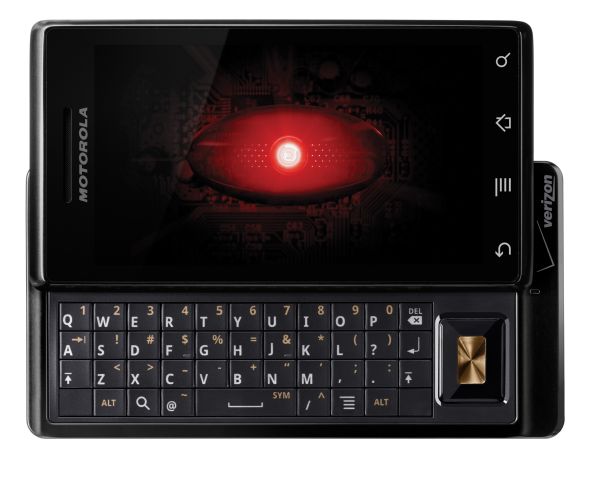 Also aboard the Droid are two software QWERTY keyboards -- one in horizontal (landscape mode) orientation, and the other in vertical (portrait mode).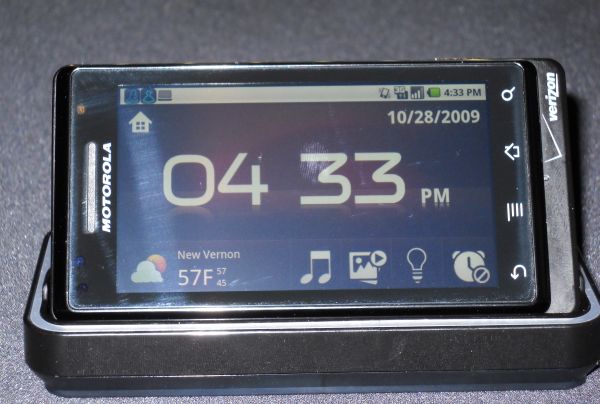
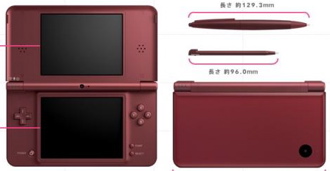 This morning, Nintendo announced the third upgrade to the DS family, the DSi LL (or DSi XL), will be released in Japan on November 21, one year after the DSi debuted, for ¥20,000 (approx. $220). The LL's main improvement is the size of its screens, which have been increased from 3.25" to 4.2" with a moderate increase to the size of the chassis. The device also includes a much bigger stylus, which looks to be the size of a ballpoint pen, and battery life has reportedly been increased to five hours at maximum screen brightness.